
There’s something that happens when you step away from your day job to serve others. You gain perspective, build real connection, and realize your skills and energy are capable of more than you thought. Last week, members of my team found that out firsthand, volunteering to build a transitional tiny home for people experiencing homelessness. We came back with sawdust on our clothes, sore muscles, and a few lessons about teamwork and community that will live beyond our team week together.
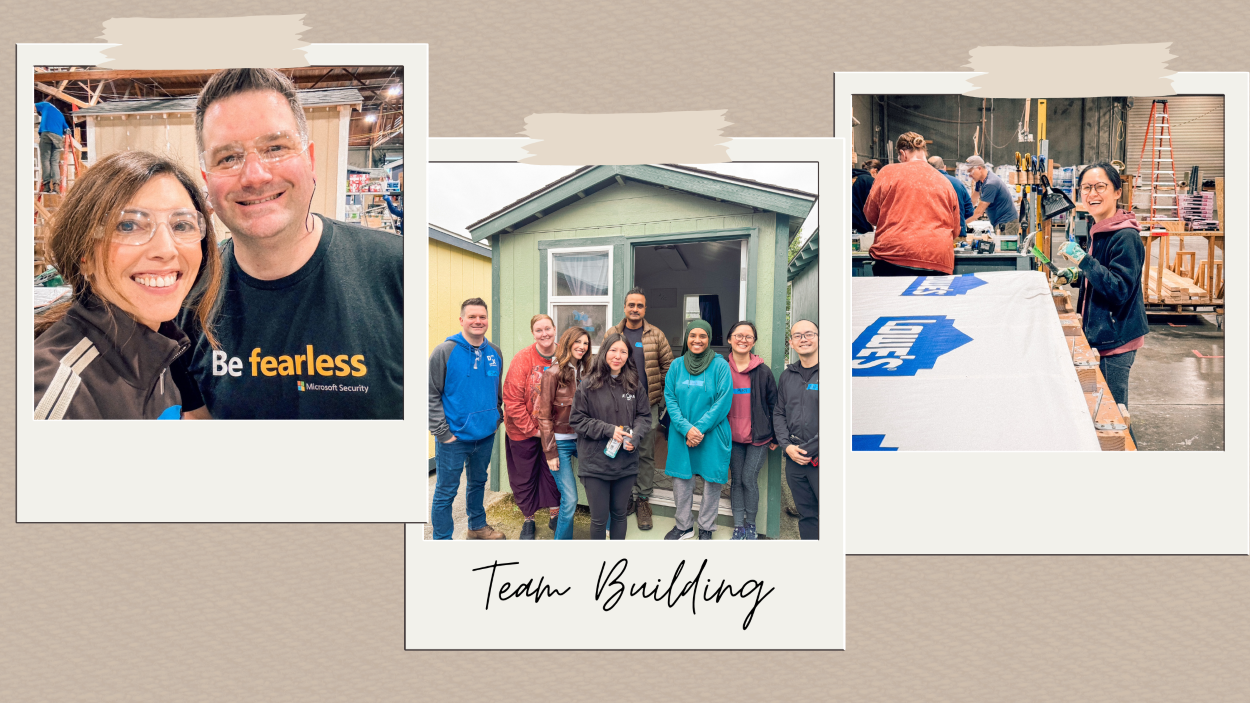
This volunteer project took place during our annual team week in Redmond, when employees from across the country come together for a full week of planning, learning, and reconnecting. Like most team weeks, the agenda was packed with strategy discussions, workshops, roadmap reviews, and enough slide decks to last us well into the next fiscal quarter.
This year, one of my incredible team members, May, organized something different. Microsoft encourages employees to give back to their communities throughout the year so she arranged for a group of us to volunteer together at Sound Foundations NW, a nonprofit dedicated to building transitional tiny homes for people experiencing homelessness. While I’ve done my share of volunteer activities, this one hit different. When you can stand back and point to something real that your team built with their own hands, it changes the experience entirely.
What Sound Foundations NW Does
Sound Foundations NW is a Seattle-based nonprofit that builds small but mighty homes as a dignified alternative to tents and encampments. Each home gives a person experiencing homelessness a roof, four walls, and importantly, a lock on their door. That lock represents something profound: privacy, security, and a chance to stabilize while working toward permanent housing.
The organization operates with an almost entirely volunteer-based building crew, which is part of what makes their model so remarkable. Each tiny home costs just $4,500 in materials, an incredibly lean amount that makes donations go a long way. They’re currently finishing roughly three to four homes per week. And I learned that they supply homes to other cities like my home town of Portland, OR.
The Impact Is Real
The data behind this work is impressive. In 2025, among tiny home residents who moved out, 55% transitioned into permanent housing (one of the highest rates among all shelter options). Even more remarkable: over 98% of those who transitioned into housing were still housed one year later.
Since 2022, more than 6,000 neighbors experiencing homelessness throughout King and Pierce Counties have transitioned off the streets through the tiny home village program. The median length of stay in a tiny home is 114 days, meaning a single home, built to last 20 years, has the potential to shelter up to 60 people on their journey out of homelessness.
Seattle has the fourth largest homeless population in the United States but Sound Foundations NW approaches the challenge with a belief that it’s solvable, and a concrete plan to prove it.
What We Did (And Why We Were Sore the Next Day)
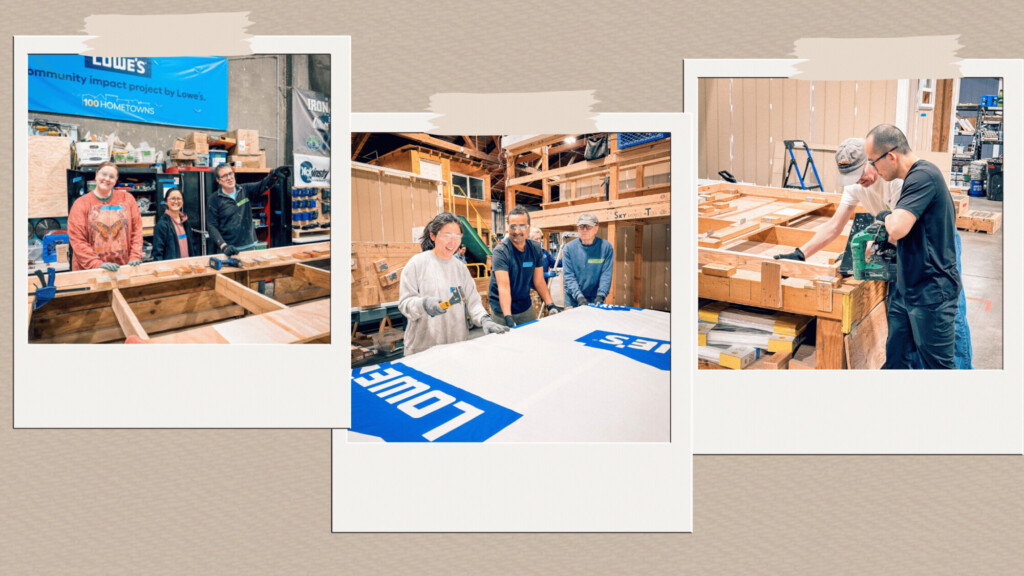
Our team spent most of the day (9am-2pm) at their build space, known as the Hope Factory, working alongside other volunteers to help construct one of these homes. No prior construction experience required, which is a good thing, because we are a team of digital marketers. We build online customer experiences, not cabins.
That said, Sound Foundations NW handed us real tools (including high powered nail guns) and trusted us to use them. We hammered, measured, cut, and assembled alongside other volunteers, united by the same simple goal: build something that will change someone’s life.
Let’s just say we won’t be swapping our day jobs building digital experiences for tool belts and shiplap anytime soon. But the next morning, when our group chat lit up with everyone comparing sore shoulders and aching forearms, we were all laughing and quietly proud.
How You Can Get Involved
If this resonates with you, there are a few ways to support Sound Foundations NW:
- Volunteer your time. They build every day of the week except Friday, and welcome individuals, friends, companies, church groups, and community organizations. No experience needed, just show up ready to work.
- Donate. At $4,500 per home, you can sponsor an entire tiny home or contribute any amount toward materials. Every dollar goes directly to the build.
- Spread the word. Share their story, follow them on social, or just tell someone what you learned today.
Learn more at soundfoundationsnw.org.
Not all team building is created equal. Some days you walk away energized. Some days you walk away with a new perspective. This was the rare day we walked away with all of it plus the knowledge that what our team built will support a real person transition to a better situation. Cheers to that!
Thanks for reading and sharing! xx





What a brilliant team building opportunity that honors the spirit of giving, especially in a community that really needs the help. Excellent!