
Valentine’s Day weekend is the perfect time to explore what genuinely strengthens relationships. Meet the 5 Love Languages: connection codes that change how you relate to people at work and at home. This post breaks down the five languages, helps you identify your own, and shows why learning to identify them can transform your most important relationships.

It’s Valentine’s Day weekend. For some, this holiday is about heart-shaped boxes of chocolate and expensive roses…maybe even a spa treatment? In my household, it was a bit more practical in the form of a double decker tower of chips and babys breath flowers…good thing my primary love language isn’t in receiving expensive gifts! 😉
😉
Back in 2019, I picked up a book by Dr. Gary Chapman called The 5 Love Languages: The Secret to Love That Lasts. Now, to be real: the book definitely has some “vintage” moments. It was written in the early 90s, and it occasionally references some dated gender roles and expectations that can make a modern professional cringe.
Once you strip away those nuances, the core concepts are a game-changer for anyone interested in emotional intelligence. At its heart, the Love Language framework is about communication efficiency: ensuring the message you’re sending is actually the one being received. It also builds self-awareness about what love looks like for you and gives you a common language to use with people in your life.
The Five Dialects: A Cheat Sheet
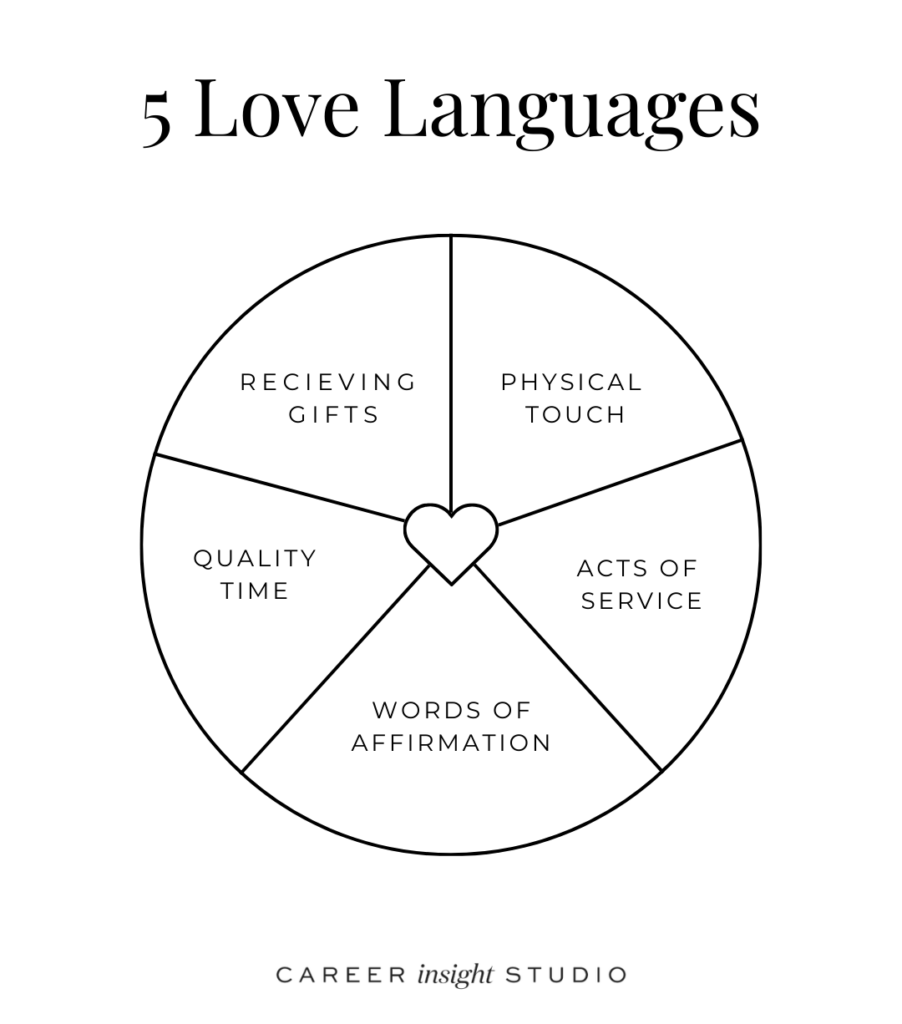
If you aren’t familiar with the “Big Five,” here’s the breakdown. Think of these as the different operating systems your family members are running on:
- Words of Affirmation: These people value verbal acknowledgments of affection and frequent praise. A “You did a great job today” or a handwritten note is their fuel.
- Acts of Service: For this group, actions speak louder than words. Anything you do to ease the burden of their responsibilities whether that’s cooking a meal or running an errand is the ultimate “I love you.”
- Receiving Gifts: This isn’t about materialism; it’s about the thoughtfulness behind the gesture. A small, “I saw this and thought of you” item tells them they are seen and known.
- Quality Time: This is about undivided attention and proactively making time to be with the person. No phones, no multitasking…just active listening and shared activities.
- Physical Touch: This ranges from a long hug after a hard day to a simple high-five or sitting close on the couch. It’s about physical presence and connection.
The “Acts of Service” Breakthrough
My husband Bret and I had a major “aha!” moment when we realized we both speak the same primary language: Acts of Service.
In our house, romance isn’t a surprise jewelry box; it’s waking up to find the dishwasher already emptied or the coffee prepped for the morning. Before we knew this, I might have bought him a thoughtful gift (which he appreciated, but didn’t “feel”), while he was wishing I’d just keep my clutter messes in order (still working on this one). When we started intentionally taking things off each other’s “to-do” lists, our relationship felt more in sync.
It’s helped the kids to be included as well. They know that if they want to show love to Mom and Dad, they don’t need to worry about buying gifts. They can simply help out around the house which is very meaningful for two busy working parents. Seeing a kid proactively clear the table? That’s our version of a candlelit dinner.
The Kid Factor: Quality Time
If you have multiple children, you know they are entirely different in their own right. My daughter Mia, for example, is a Quality Time specialist.
After we took the quiz as a family, it was clear, love for her is spelled T-I-M-E. While she appreciates thoughtful gifts; she would rather spend 30 minutes having a meaningful conversation where I am fully present, really listening, and not glancing at my phone to check a Teams notification. Knowing her preference has made our connection so much stronger over the years.
Does This Work at the Office?
I share a lot about leadership and team dynamics on this blog. And while I wouldn’t recommend bringing the “Physical Touch” language into the office (best to keep it to professional high-fives!), the other four languages are remarkably effective in a professional setting.
Speaking the right language at work is simply about emotional intelligence (EQ). It’s recognizing that one employee might crave public recognition (Words of Affirmation), while another would much prefer “Acts of Service” by clearing a bottleneck in their project workflow.
Find Your Language
This Valentine’s Day weekend, skip the guessing game and give the gift of knowledge. Whether you’re a busy professional or parent (or both!), knowing your language and the languages of the people close to you is the ultimate shortcut for a smoother, happier home and work life.
You can take the short Love Language Quiz for free here. There is an official version where you can choose between adults and kids but you have to pay for the full report (~$34 USD). If that’s of interest, you can check that out here.
Thanks for reading and sharing. xx





This resonates: “… ensuring the message you’re sending is the one being received.” It supports a theory I have, that 99% (this is not a scientific or studied conclusion) of relationship heartaches stem from unresolved misunderstandings.
Thanks for this quick reminder and synopsis of how we can better communicate.
Love this book and the insights are genuinely powerful if you learn your love style and the styles of those around you. I am first about physical expression. But as a leader in a business setting, that’s not acceptable so I resort to words of affirmation and A fist bump.